Our Waterways
What makes a Healthy Waterway
A healthy waterway is part of a healthy catchment. When a waterway is healthy it keep landscapes functioning, supports biodiversity, and improves wellbeing for both nature and people. Upper Murrumbidgee Waterwatch measures water quality, waterbugs and riparian condition to understand how healthy our waterways are.
The Essentials of Waterway Health
Healthy creeks and rivers rely on a few key ingredients that work together to support life. While you're enjoying your local waterway, see if it has the following elements associated with a healthy waterway.

Shade and shelter
Plants along the creek, especially trees are the backbone of a healthy waterway. They keep the water cool, their roots hold the soil in place, and fallen branches create shelter for fish and other animals.
Plants in the water
Aquatic plants grow in and through the stream, creating places for frogs, waterbugs, and fish to live, hide, and find food. They add structure and diversity to the waterway.

Stable soils
Strong, well‑vegetated banks help keep the water clear. When banks erode, mud washes into the creek, making it harder for plants to grow and for animals like platypus and waterbugs to survive.

Fresh flow
Flowing water brings oxygen, refreshes habitats, and keeps the whole system alive from the smallest microbes to the largest animals.
Why Are Habitats So Important?
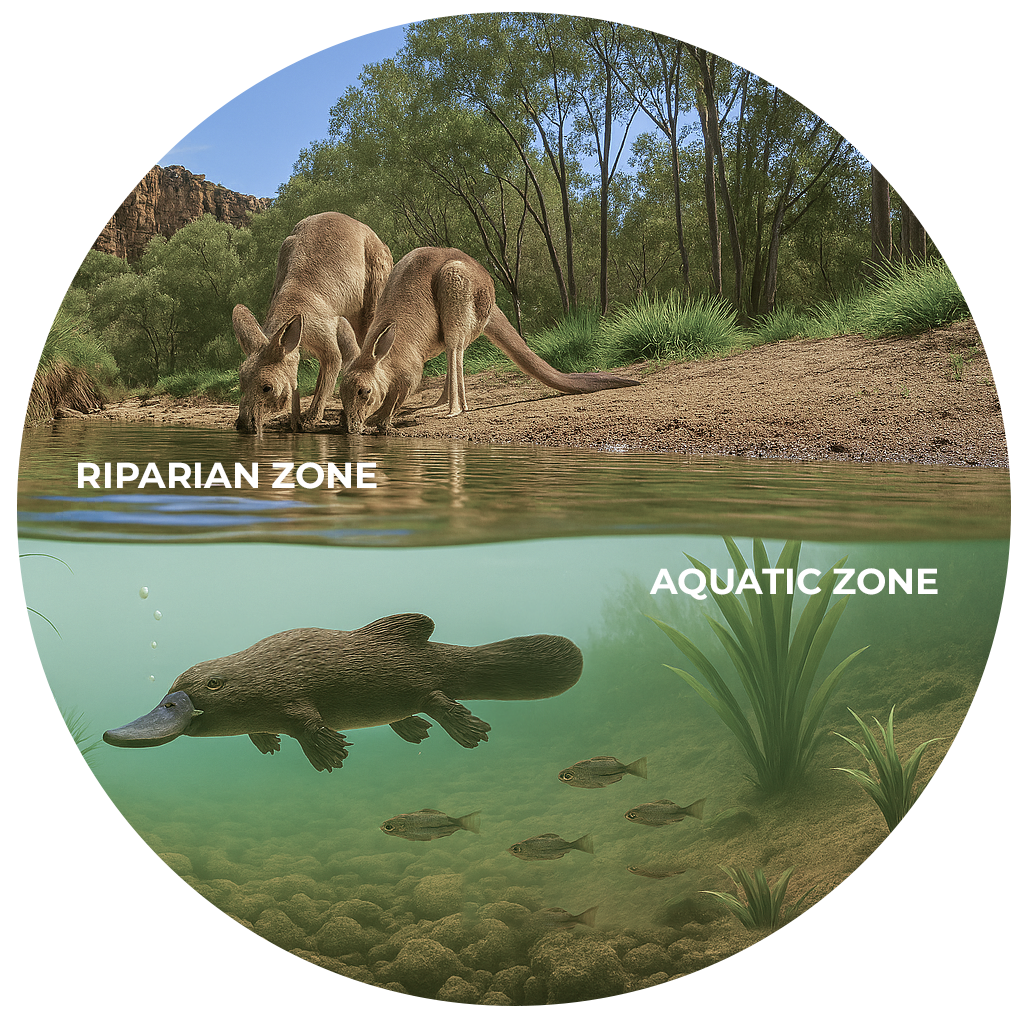
Habitats are the natural homes that provide food, shelter, and safety for living creatures. Waterways include two closely connected habitat zones:
- Riparian zone – the trees and plants along creek banks
- Aquatic zone – the life living in the water
What happens on the banks affects what happens in the water. Bare banks crumble and wash into the creek, while planted banks stay strong and stable.
Together, these zones help filter water, add oxygen, and support life at every level of the ecosystem.
Upper Murrumbidgee Catchment
The Upper Murrumbidgee catchment is part of the Murray–Darling Basin and includes the Murrumbidgee River and its tributaries upstream of Burrinjuck Dam. The area also includes Canberra, the biggest city in the Murray–Darling Basin. This region spans urban, rural and protected landscapes, all influencing waterway health.
Key waterways and their regions in the catchment include:
- Murrumbidgee River – all regions
- Molonglo River – Woden, Captains Flat, Inner North & South Canberra, Weston Creek
- Queanbeyan River – Queanbeyan
- Jerrabomberra Creek – Royalla, Environa, Jerrabomberra, Hume, Fyshwick
- Ginninderra Creek – Gungahlin, Hall, Belconnen
- Numeralla River
- Bredbo River
- Yass River – Yass, Sutton, Gundaroo, Murrumbateman
- Paddy’s River
- Cotter River
- Cooma Creek